Guide
What Is Container Devanning?
Devanning is where the cold chain is most exposed - the moment a container opens. This guide explains what devanning is, how the process works, and how to unload reefer cargo without breaking the cold chain.
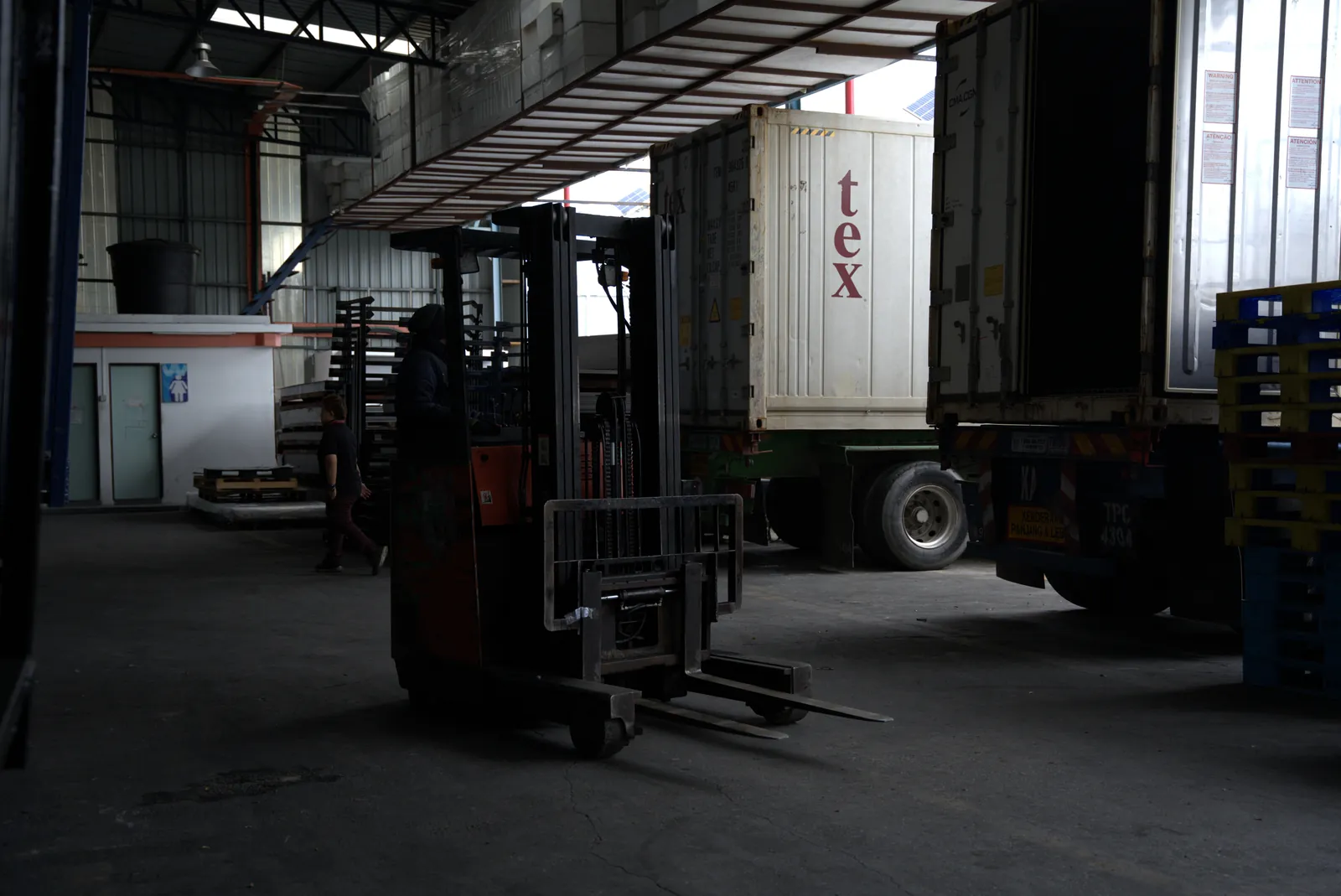
- Unload
- container to storage
- Fast
- minimise the gap to cold
- Logged
- counted on the way in
Container devanning is the process of unloading a shipping container and moving the goods inside into storage or onward distribution. It is also called container unloading or unstuffing.
For frozen and chilled cargo, devanning is where the cold chain is most exposed: the minutes or hours between the container doors opening and the goods reaching a cold room. Done well - fast, under temperature control, and with everything counted - devanning protects both the cargo and the paperwork. Done badly, it breaks the cold chain before the goods are even on a shelf.
What does devanning mean?
Devanning means emptying a shipping container - inspecting, counting, and removing the goods inside, then moving them into a warehouse, a cold room, or onto a vehicle for delivery. The opposite process, loading a container, is called vanning or stuffing. For temperature-sensitive cargo arriving in a reefer (refrigerated) container, devanning has to happen quickly and under temperature control, because the goods start to warm the moment the container is opened.
Why devanning matters for temperature-sensitive cargo
A reefer container holds its temperature while it is sealed and powered. The risk begins at the doors. Once they open on a hot loading yard, frozen and chilled goods start to warm, and every minute they sit exposed eats into their shelf life and their compliance record.
Two things go wrong most often: the cargo is left waiting because there is no cold space ready, and no one counts or logs what comes off, so accountability disappears. Both are avoidable with planning.
What's in the container devanning process
A controlled devanning runs in a clear sequence rather than a scramble at the gate.
- Arrival and check-in - the container is received and its details confirmed
- Inspection - seals checked, condition and temperature noted
- Unloading - goods removed, by hand or forklift depending on how they are stacked
- Counting and logging - quantities recorded against the manifest
- Put-away - temperature-sensitive goods moved straight into cold storage
Reefer vs dry containers
Both are devanned, but reefer cargo is on a clock that dry cargo is not.
- Dry containers hold ambient goods - devanning can be steady, with no temperature urgency
- Reefer containers hold frozen or chilled goods - devanning must be fast and feed straight into cold
- A reefer that arrives early still needs a team and cold space ready, not a queue
What goes wrong in devanning
- Unloading slowly, leaving cold cargo exposed on the yard
- No cold space ready, so goods wait before they can be put away
- Counting nothing, so shortages or damage cannot be traced
- Treating a reefer container like a dry one and losing the cold chain
Rushed devanning vs. controlled devanning
Same container, two very different outcomes for temperature-sensitive cargo.
| Rushed / uncontrolled | Controlled, into cold | |
|---|---|---|
| When it happens | Whenever a crew is free | A scheduled slot, ready on arrival |
| Temperature exposure | Cargo waits on the yard | Straight into cold storage |
| Record of goods | Informal or none | Counted and logged on the way in |
| Early container arrival | Sits until someone is free | Offloaded on arrival |
How to devan temperature-sensitive cargo wellFive steps that keep the cold chain intact from the container to the cold room.
- 01
Share the container details early
Contents, temperature, and ETA.
- 02
Book the slot in advance
So a team and cold space are ready the moment it lands.
- 03
Inspect before you unload
Seals, condition, and temperature, noted up front.
- 04
Unload fast, under control
Move cold cargo straight into cold - do not let it wait.
- 05
Count, log, and put away
Every pallet recorded and stored, accounted for at each step.
Container devanning questions, answered
What is the difference between devanning and unstuffing?
They mean the same thing - emptying a shipping container. Devanning and container unstuffing both describe unloading the goods inside; the reverse, loading a container, is called vanning or stuffing.
Why does devanning matter for frozen goods?
Because the cold chain is most exposed at the container doors. Frozen and chilled cargo starts to warm as soon as a reefer is opened, so devanning has to be quick and feed straight into cold storage. A slow or unplanned devan can damage the goods before they are ever stored.
Can devanning happen straight into cold storage?
Yes - and for temperature-sensitive cargo it should. Devanning a reefer directly into a cold room removes the gap where goods would otherwise warm on the yard. This is exactly what a cold-chain provider's container offload service is built to do.
What happens if a reefer container arrives early?
Without a plan, it waits - and the longer it sits, the more the cargo is exposed. With a scheduled offload slot, an early reefer can be devanned on arrival into ready cold space, which is why planning the slot ahead of time matters.